Hello!
I am a researcher at the School of Physicsat the University of Bristol (UK), working on nonequillibrium disordered systems with powerful theoretical and numerical techniques.
My focus is on emergent properties, collective behaviour and spatial structure in a wide range of systems: from glasses to animals, from gels to bones.


Partial active wetting
As mentioned in a previous post, self-propelled particles tend to accumulate at boundaries. When combined wit the ability of some active particles (e.g. active Brownian particles) to phase separate in a dilute (gas) and dense (liquid) phase, this accumulation can be seen as the manifestation of complete wetting. Complete wetting, in ordinary matter, is equivalent…

Inverse inference and brain criticality
Our brain controls our thoughts, emotions, and behaviour through a complex network of neurons. Sophisticated brain imaging techniques like fMRI help neuroscientists monitor activity patterns in different brain regions, but analyzing the data requires advanced analytical tools. A popular approach is to map brain imaging data onto simplified physics-inspired models from statistical mechanics. The goal…

Probing excitations and cooperatively rearranging regions in deeply supercooled liquids
Supercooled liquids are local equilibrium states where the features of glassy dynamics progressively emerge as we decrease the temperature. We have a broad understanding of what happens in a generic supercooled liquid: the dynamics become slow and highly heterogeneous, motion is gradually more cooperative, and some changes in the local spatial correlations occur accompanied by…
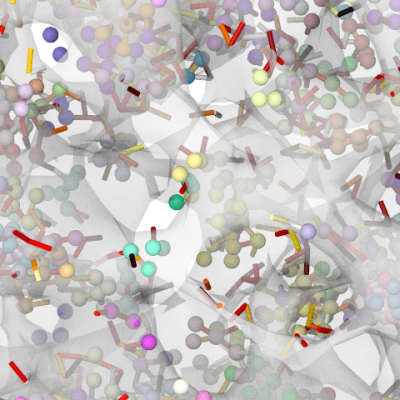
Modelling the force chains in emulsion gels
Force chains are networks of stresses that propagate in complex, distinctive patterns across disordered media. They have been successfully quantified in granular materials and have been a useful concept to rationalise the flow behaviour of such systems. They can be visualised in granular experiments for example with the help of photo-elastic polymers. Granular and colloidal…

Collective behaviour changes with age
Yushi Yang has recently completed his PhD project in Bristol focusing on the collective behaviour of a specific living organism: Zebrafish, a small, semi-transparent fish coming from tropical fresh waters employed extensively in biology as a model organism. Quantitative studies of the collective behaviour of animals have been performed in many different contexts, from midges…

Wetting Transition of Active Brownian Particles on a Thin Membrane
When my 12-month old daughter started pushing her baby walker around the apartment, I noticed how often she ends up stuck against tables, walls, and obstacles in general, as she struggles (or simply does not even try) to turn the walker around. I could not avoid thinking that that was a transparent example of the…
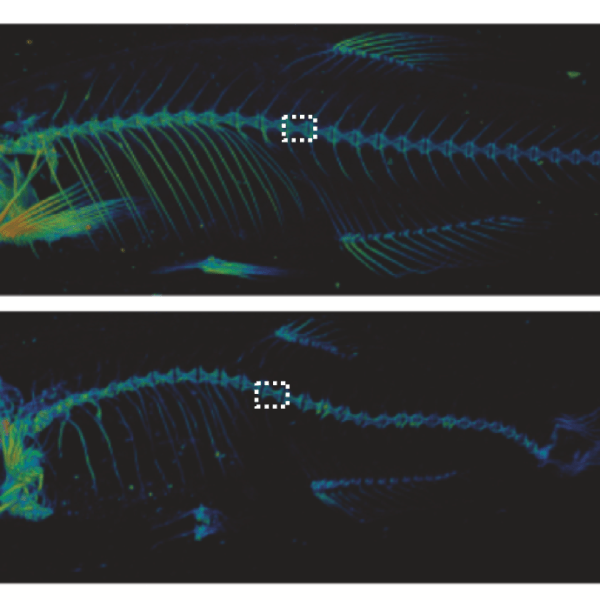
Morphology analysis of bone malformation
Soft matter is a broad field, ranging from colloidal particles to micelles, from proteins to cellular tissues. As I mentioned in a previous post, a physics-based approach to characterising the morphology of soft biological matter can be very insightful. It provides simple, geometrical and structural metrics to identify variation in tissues. We recently demonstrated this…
Phase Separation and Multibody Effects in Active Matter
Self-organisation has many forms, many of which have been studied for systems in equilibrium or metastable equilibrium, as in crystal formation or in gelation. The striking feature of these phenomena is the emergence of complex patterns of aggregation just from elementary interactions among the constituents. These are driven by an imbalance in the thermodynamic potentials…

Perspective on dynamical phase transitions and structure in glassy systems
Liquids are normally considered to be thermodynamically stable. However, rapidly cooled liquids attain a so-called metastable state — the supercooled or undercooled liquid. As we decrease the temperature, these liquids become more and more viscous and structural relaxation becomes slower and slower. One could naively infer that, as the slowing down proceeds, nothing happens in…

Minimal Vicsek model in Python
The Vicsek model is one of the simplest models for active matter. It displays interesting features, such as swarming. Large scale simulations are often needed in order to provide firm statements on the statistical properties of this kind of models. However, for a pedagogical and illustrative purpose it may be useful to have an elementary…
Something went wrong. Please refresh the page and/or try again.
 Francesco Turci